

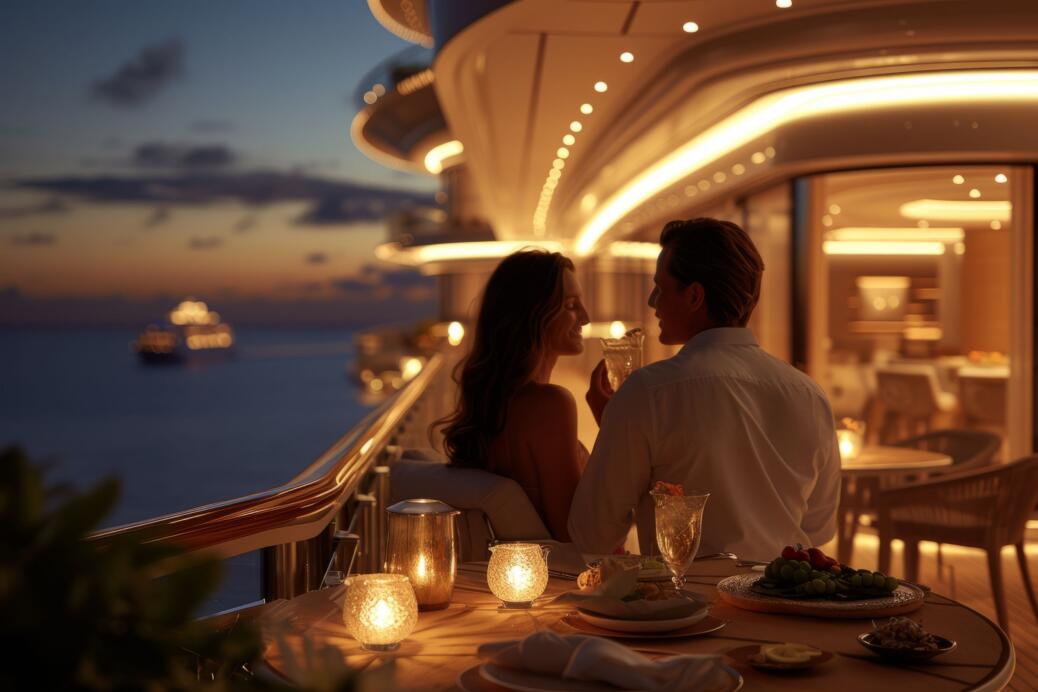
A cruise vacation begins long before a passenger steps aboard the ship. Guests research destinations, compare ships, study staterooms, browse restaurants and excursions, watch videos, read reviews, and imagine what the experience will be like. By embarkation day, many passengers have spent months building expectations around the voyage.
That anticipation is an important part of the cruise guest experience. It establishes expectations that the cruise line will eventually need to fulfill, but it also creates opportunities to exceed them.
Some of the most memorable hospitality experiences are expected. A guest anticipates an excellent dinner and receives one. A family looks forward to an excursion that becomes a highlight of the trip. A couple celebrating an anniversary expects attentive service and feels appropriately recognized.
Other memorable experiences are unexpected. An employee remembers a preference mentioned the previous evening. A crew member notices a guest needs assistance before being asked. A concierge recommends an experience perfectly suited to a passenger’s interests. A service problem is handled with greater care than the guest anticipated.
For cruise operators, understanding both types of moments can provide a more complete view of the cruise guest experience. Operational standards establish the foundation, while the way those standards are delivered can determine what passengers actually remember.
How Guest Expectations Shape the Cruise Experience
Customer expectations provide the reference point against which an experience is evaluated. Those expectations can come from previous cruises, advertising, travel advisors, online reviews, social media, recommendations, loyalty status, price, and the cruise line’s own brand positioning.
A first-time cruiser may arrive with very different expectations from a passenger who has sailed with the brand ten times. Similarly, someone booking a luxury suite may evaluate service differently from a traveler selecting a more value-oriented product.
Cruise operators therefore need to understand not only what they deliver, but what their brand has led guests to expect.
Before the Cruise
The booking and planning process establishes early expectations around responsiveness, convenience, personalization, and professionalism.
At Embarkation
The arrival experience provides the first physical confirmation of the brand promise. Organization, communication, waiting times, recognition, and employee interactions can influence the guest’s initial impression of the voyage.
During the Voyage
Passengers continuously compare their actual experience with expectations created before sailing. Accommodations, dining, entertainment, excursions, service, and onboard amenities all contribute to that evaluation.
After the Cruise
Disembarkation, follow-up communication, loyalty outreach, and any unresolved customer service concerns can influence the final memory of the experience.
Looking at the journey as a whole helps operators identify where expectations are being created, fulfilled, exceeded, or unintentionally undermined.
Expected Moments Still Need to Be Excellent
Hospitality organizations sometimes focus heavily on surprise and delight, but the moments guests already expect should remain the priority.
A passenger expects the stateroom to be clean. They expect reservations to be accurate. They expect employees to provide correct information. They expect meals to arrive appropriately prepared and excursions to be organized professionally.
These experiences may not generate dramatic stories when everything goes correctly, but they establish trust.
Core expectations commonly include:
- Accurate booking information
- Clear pre-cruise communication
- Organized embarkation
- Clean and well-maintained accommodations
- Professional employee interactions
- Reliable housekeeping
- Quality food and beverage
- Accurate information
- Well-managed excursions
- Responsive guest services
- Appropriate handling of special requests
- Organized disembarkation
Unexpected touches have less value when these fundamentals are inconsistent. A complimentary amenity is unlikely to impress a guest who has spent hours trying to resolve a basic service problem.
Where Memorable Cruise Moments Often Happen
Not every touchpoint carries the same emotional weight. Certain moments naturally create greater opportunities to influence how passengers remember the voyage.
| Cruise Touchpoint | What Guests May Expect | Opportunity to Create a Stronger Memory |
| Pre-Cruise Planning | Accurate information and easy planning | Personalized recommendations based on guest interests |
| Embarkation | Efficiency and clear directions | Warm recognition and a seamless welcome |
| Stateroom Arrival | Clean, prepared accommodations | Thoughtful recognition of preferences or occasions |
| Dining | Quality food and professional service | Personalization, knowledgeable recommendations, remembered preferences |
| Sea Days | Activities and relaxation | Proactive assistance and unexpected experiences |
| Shore Excursions | Organization and safety | Strong local insight and personalized recommendations |
| Celebrations | Basic acknowledgement | Thoughtful recognition appropriate to the occasion |
| Service Problems | A solution | Empathetic recovery and proactive follow-up |
| Disembarkation | Efficient departure | Helpful assistance and a positive final interaction |
This framework gives cruise operators a useful starting point for evaluating not only operational execution, but the moments most likely to shape guest perception.
Personalization Makes Expected Experiences Feel Individual
Personalization does not always require elaborate gestures. Often, the strongest examples come from employees paying attention to information already available during normal guest interactions.
A bartender remembering a preferred drink, a restaurant team acknowledging a dietary preference without requiring another explanation, or a stateroom attendant recognizing how a guest prefers the room arranged can make routine service feel considerably more personal.
Recognition
Returning guests and loyalty members may expect some level of recognition, but effective recognition should extend beyond simply identifying status. Employees can demonstrate that the organization understands the individual guest and their history with the brand.
Preferences
Food, beverage, seating, housekeeping, excursion, wellness, and entertainment preferences all create opportunities for personalization when information can be shared appropriately across departments.
Special Occasions
Birthdays, anniversaries, honeymoons, family reunions, and milestone trips frequently carry greater emotional significance than an ordinary vacation. Thoughtful recognition can become an important part of how the guest remembers the cruise.
For luxury and upscale hospitality brands, these details are particularly important because guests often expect service to adapt naturally to their individual preferences.
Anticipation Is One of the Strongest Forms of Hospitality
Responsive service addresses a need after the guest communicates it. Anticipatory service recognizes the likely need beforehand.
Cruise environments offer numerous opportunities for this type of hospitality because employees interact with guests repeatedly over several days.
A server may recognize that a guest consistently orders the same beverage. A concierge may notice that a passenger is particularly interested in art and suggest a relevant shore experience. An employee near the gangway may proactively provide information about transportation or weather conditions at the destination.
The most effective anticipation is grounded in observation rather than assumption. Employees need enough awareness to recognize opportunities while respecting individual preferences and boundaries.
Surprise and Delight Should Support the Brand
Unexpected moments can create powerful memories, but cruise lines should resist turning surprise and delight into another rigid checklist.
If every passenger receives the same supposedly unexpected gesture at the same stage of the voyage, the experience can quickly become predictable.
Effective surprises tend to be:
- Relevant to the individual guest
- Appropriate to the brand
- Connected to information the guest has shared
- Proportionate to the situation
- Delivered naturally
- Operationally sustainable
A meaningful recommendation or thoughtful follow-up can be more effective than an expensive amenity if it demonstrates genuine awareness of the guest.
Luxury service in particular benefits from discretion. The experience should feel attentive without becoming performative.
The Peak Moments of a Cruise Matter
Guests do not necessarily remember every part of an experience equally. Certain moments stand out because they carry greater emotional significance.
On a cruise, these can include the first view of the ship, entering a suite, sailing away from port, a milestone dinner, arriving at a long-awaited destination, seeing a memorable performance, or celebrating an important occasion.
Operators can identify these high-value moments and examine how well the service environment supports them.
First Impressions
Booking, pre-cruise communication, the terminal, and embarkation create early evidence of whether the actual experience aligns with the expectations established during marketing and sales.
Milestone Experiences
Special dinners, celebrations, premium excursions, spa appointments, and other planned experiences may carry greater importance because guests have specifically anticipated them.
Moments of Disruption
A service problem can become disproportionately memorable. Strong service recovery can help protect the broader experience when expectations are not met.
Final Impressions
Disembarkation is operationally complex, but it is also the final major stage of the voyage. Confusing communication or an unnecessarily stressful departure can affect the way passengers remember an otherwise excellent trip.
Emotional Experience Matters Alongside Service Standards
Cruise operators need objective standards. Without them, it becomes difficult to establish expectations, train employees, compare performance, or determine whether fundamental service requirements are being delivered consistently.
The strongest customer experience measurement programs also examine qualitative dimensions of the interaction.
Consider a restaurant greeting. A traditional standard might record whether the employee acknowledged the guest within an expected period. A more complete evaluation can also describe whether the greeting felt welcoming, confident, personalized, rushed, or transactional.
Both forms of information are useful.
Objective measures help establish consistency. Qualitative observations provide context around how that execution may have felt from the passenger’s perspective.
The Difference Between a Service Standard and a Memorable Experience
A practical way to evaluate cruise hospitality is to consider several layers of performance.
Level 1: Was the Basic Requirement Met?
The room was clean, the reservation was accurate, or the requested item was delivered.
Level 2: Was the Service Delivered Well?
The employee communicated professionally, demonstrated knowledge, and completed the interaction efficiently.
Level 3: Was the Experience Personalized?
The employee adapted the interaction to the guest’s preferences, circumstances, or previous conversations.
Level 4: Did the Experience Create Emotional Value?
The guest felt recognized, reassured, excited, cared for, or otherwise positively connected to the experience.
Cruise lines do not need every interaction to reach the fourth level. Attempting to manufacture emotional significance in routine encounters can make service feel unnatural. The framework is more useful for identifying where deeper engagement would genuinely improve the passenger journey.
Measure the Moments That Matter Most
Cruise mystery shopping can help operators evaluate the customer journey at a level of detail that broad satisfaction scores may not provide.
Depending on the program, Coyle’s cruise mystery shoppers can assess touchpoints such as:
- Reservation inquiries
- Pre-cruise planning
- Telephone interactions
- Embarkation
- Stateroom arrival
- Housekeeping
- Butler and concierge service
- Restaurants and bars
- Guest services
- Entertainment
- Spa and wellness
- Retail
- Shore excursions
- Service recovery
- Disembarkation
- Post-cruise communication
Evaluators can document objective standards while also providing detailed narrative observations about communication, personalization, employee engagement, and the emotional quality of important interactions.
This allows leadership to examine both operational execution and the experience those operations ultimately create.
Turn Guest Experience Findings Into Operational Insight
Measurement becomes more valuable when operators connect individual findings to broader patterns.
If passengers consistently encounter confusing information during pre-cruise planning, the issue may involve communication rather than a single employee. If personalization is strong in dining but weak elsewhere, leadership may want to examine how guest preferences are shared between departments. If service scores decline during predictable high-volume periods, staffing or workflow may deserve attention.
A useful review process can group findings into several categories:
Brand Standards: Are defined expectations being executed consistently?
Employee Performance: Are employees demonstrating the expected service behaviors?
Operational Processes: Are systems and procedures helping or hindering the experience?
Personalization: Is relevant guest information being used effectively?
Emotional Engagement: Which interactions are creating particularly positive or negative memories?
Service Recovery: When expectations are missed, is the response restoring guest confidence?
This approach helps move customer experience measurement beyond a collection of individual scores.
Creating Experiences Guests Want to Repeat
Cruise lines compete in a market where travelers have many vacation options. A successful voyage therefore needs to accomplish more than satisfying basic expectations. Guests should finish the trip with confidence in the brand and compelling reasons to return.
Consistency plays a major role in building that confidence. Personalization makes the experience feel relevant. Memorable moments give passengers stories and experiences they associate with the brand. Effective recovery protects the relationship when something goes wrong.
Cruise operators that understand these different dimensions can make more informed decisions about where to invest in training, operations, quality assurance, and customer experience improvements.
Understand the Complete Cruise Guest Journey
Coyle Hospitality helps cruise lines evaluate what passengers experience before, during, and after their voyage. Customized mystery shopping programs can measure service standards, employee interactions, personalization, emotional engagement, service recovery, and operational consistency across the complete customer journey.
By combining structured evaluation with detailed narrative observations, Coyle helps cruise operators identify the experiences that are working well, the moments where expectations are being missed, and the opportunities that can make the passenger journey more memorable.
Contact Coyle Hospitality to discuss a customized cruise mystery shopping or customer experience measurement program.
Frequently Asked Questions
What do cruise guests expect from a cruise experience?
Expectations vary by cruise segment and traveler, but guests commonly expect accurate communication, clean accommodations, professional service, quality food and beverage, organized activities and excursions, responsive guest services, and a smooth overall journey. Premium and luxury travelers may place additional emphasis on personalization, recognition, anticipation, and attention to detail.
How can cruise lines exceed guest expectations?
Cruise lines can exceed expectations by first delivering core service standards consistently and then identifying appropriate opportunities for personalization, anticipation, thoughtful recognition, and proactive assistance. Unexpected gestures are most effective when they are relevant to the individual guest rather than standardized across every passenger.
What are the most important touchpoints in the cruise customer journey?
Important touchpoints include booking, pre-cruise planning, embarkation, stateroom arrival, dining, onboard service, entertainment, shore excursions, guest services, service recovery, disembarkation, and post-cruise communication. The relative importance of each touchpoint can vary depending on the passenger and type of voyage.
How do cruise lines measure guest experience?
Cruise lines can use guest surveys, online reviews, complaint data, operational metrics, loyalty information, quality assurance programs, and mystery shopping. Combining several sources can help operators understand both broad satisfaction trends and the detailed interactions contributing to those results.
What does a cruise mystery shopper evaluate?
A cruise mystery shopper can evaluate predetermined parts of the passenger journey, including reservations, embarkation, accommodations, housekeeping, dining, bars, guest services, entertainment, spa, retail, excursions, service recovery, and disembarkation. Evaluations can measure objective brand standards as well as qualitative elements such as personalization, communication, and emotional engagement.


