

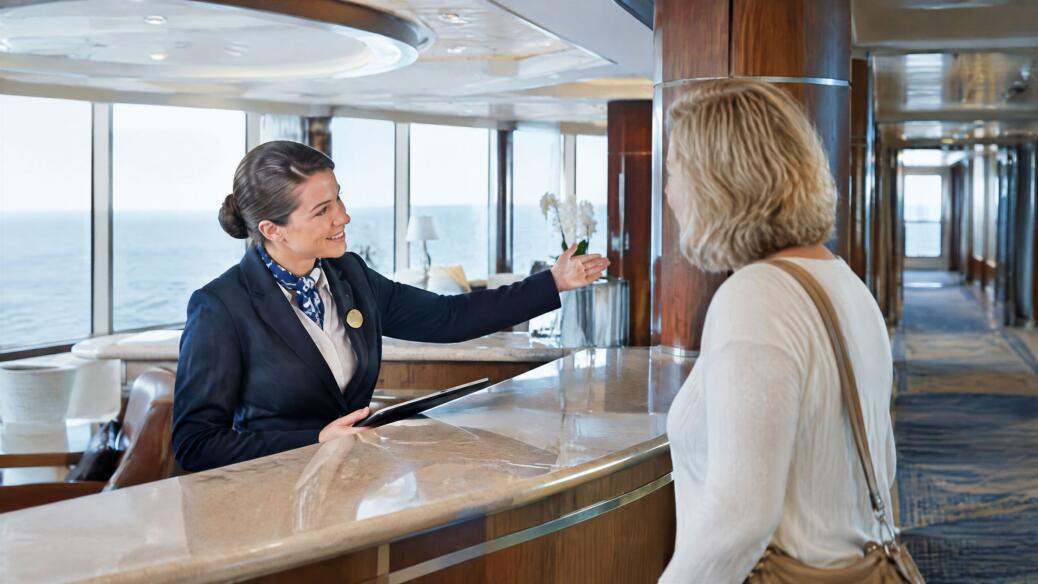
Even well-run cruise lines encounter service problems. Weather changes itineraries, excursions run late, dining reservations get mixed up, maintenance issues arise, and guests occasionally receive an experience that falls short of expectations. With so many departments, employees, vendors, and customer touchpoints involved in a single voyage, eliminating every service failure is unrealistic.
What cruise lines can control is how effectively they respond. Strong service recovery can limit frustration, restore guest confidence, and provide operational insight that helps prevent similar problems in the future. For luxury and premium cruise brands in particular, the quality of the response may have a lasting influence on how guests remember the overall voyage.
Effective cruise service recovery requires more than compensation or an apology. It depends on communication, employee judgment, ownership, follow-through, and a clear understanding of what the guest actually needs. Evaluating those behaviors should therefore be an important part of any comprehensive cruise guest experience program.
What Is Service Recovery in the Cruise Industry?
Service recovery is the process of responding to a customer experience that has gone wrong and working to restore the guest’s satisfaction and confidence in the brand. In a cruise environment, the original issue can involve almost any stage of the passenger journey, from booking and embarkation through onboard service, excursions, dining, accommodations, and disembarkation.
Common situations that may require service recovery include incorrect reservations, delayed service, stateroom maintenance concerns, billing problems, excursion disruptions, dining issues, communication failures, and unmet special requests. Larger operational disruptions, including itinerary changes or weather-related events, can also create situations where clear and thoughtful recovery becomes especially important.
The response will vary depending on the problem, but the underlying principles are consistent. Guests want to know that their concern has been understood, that someone has taken responsibility for addressing it, and that they will not have to spend the remainder of their vacation repeatedly pursuing a solution.
Why Service Recovery Matters So Much on a Cruise
Cruise service failures differ from many land-based hospitality problems because the guest remains within the same operating environment. A dissatisfied hotel guest may leave the property, and a restaurant guest can choose another restaurant the following evening. A cruise passenger may still have several days remaining aboard the ship.
That creates both risk and opportunity. An unresolved problem can affect subsequent interactions and shape the guest’s perception of the remainder of the voyage. A well-managed response, however, gives the cruise line an opportunity to restore confidence while the guest is still onboard.
Cruise vacations also tend to involve significant anticipation. Guests may have planned and saved for a voyage for months, coordinated travel for a family or group, or chosen a sailing to celebrate a milestone. The emotional investment surrounding the trip can make disruptions feel particularly consequential.
For that reason, cruise service recovery should account for more than the immediate operational issue. Employees need to understand the broader effect the problem may have had on the passenger’s experience.
Listen Before Trying to Solve the Problem
A quick solution is valuable, but speed should not come at the expense of understanding the concern.
Frontline employees sometimes begin proposing remedies before a guest has fully explained what happened. This can create additional frustration if the solution does not address the actual problem or if the guest feels dismissed.
Effective service recovery begins with careful listening. Employees should understand what occurred, how it affected the guest, what has already been done, and what outcome the guest is seeking. In many cases, the emotional component of the complaint is just as important as the operational component.
Consider a dining reservation error. The logistical problem may be solved by finding another table, but the guest may be upset because the reservation was intended for an anniversary dinner or because they had already spent considerable time trying to resolve the issue. Understanding that context allows the employee to provide a more appropriate response.
Give Employees the Ability to Take Ownership
One of the fastest ways to make a service problem worse is to send a guest from employee to employee without a clear resolution.
Cruise ships are complex operations, and many issues legitimately require coordination between departments. Guests, however, should not bear the burden of navigating the organizational structure.
Frontline employees need clear guidance about what they can resolve independently, when a manager should become involved, and how a concern should be transferred when another department must take action. Even when an employee cannot personally fix the problem, that employee can maintain ownership by explaining the next step, facilitating the handoff, and confirming that the issue reaches the appropriate person.
Empowerment also requires judgment. Strict recovery scripts may help establish basic procedures, but unusual circumstances often require employees to consider the individual guest, the severity of the issue, and the context surrounding the complaint.
Communicate Clearly During Disruptions
Communication becomes particularly important when a problem affects many passengers at once.
Weather, itinerary changes, transportation disruptions, port conditions, technical issues, and delayed excursions can all create uncertainty. Guests may be more understanding of an unavoidable disruption when they receive timely, accurate information and know what to expect next.
Communication should explain what is known, what is still being determined, what the cruise line is doing, and when passengers can expect another update. Employees across departments should also receive consistent information so guests do not hear conflicting explanations depending on whom they ask.
Silence creates room for speculation. Clear communication helps passengers understand the situation and demonstrates that the cruise line is actively managing it, even when an immediate resolution is not possible.
Match the Recovery to the Guest and the Situation
Not every service problem requires compensation, and compensation alone does not guarantee successful recovery.
A sincere apology and quick correction may be appropriate for a minor inconvenience. More significant failures may justify a complimentary service, onboard credit, refund, future travel consideration, or another form of recovery. The response should reflect the severity of the problem and the effect it had on the guest.
Luxury cruise brands face an additional consideration. Guests paying for a premium experience often expect recovery to feel personalized and thoughtful rather than transactional. A standardized offer delivered without empathy may technically satisfy company policy while doing little to restore the relationship.
This is one reason Coyle’s luxury and upscale mystery shopping programs evaluate qualitative elements of the customer experience in addition to defined service standards. The way an employee communicates and responds can matter as much as the final remedy.
Follow Through After a Solution Is Offered
A service recovery interaction should not necessarily end when the employee proposes a solution. Follow-through confirms that the promised action actually occurred and gives the guest confidence that the concern was taken seriously.
If maintenance is being sent to a stateroom, someone should verify that the repair was completed. If a dining issue is being corrected for the following evening, the relevant restaurant team should know about the arrangement before the guest arrives. If an excursion concern requires a refund or adjustment, the passenger should not have to repeatedly check whether it was processed.
Follow-up can be particularly valuable after more significant problems. A brief conversation later in the voyage gives staff an opportunity to determine whether the guest is satisfied with the resolution and whether anything else is needed.
These interactions also help the organization identify recovery failures that might otherwise remain hidden until a post-cruise survey or public review.
Service Recovery Should Work Across the Entire Cruise Journey
Cruise service recovery is often associated with onboard guest services, but problems can occur well before embarkation or after passengers return home.
Before the Cruise
Booking errors, special requests, payment concerns, travel documentation, accessibility needs, dining arrangements, and pre-cruise communication can all require recovery. Resolving these issues effectively can prevent guests from boarding the ship already frustrated with the brand.
During Embarkation
Long waits, luggage issues, confusing instructions, documentation problems, and poor communication can create a negative first impression. Strong recovery during embarkation can help prevent an early problem from influencing the remainder of the voyage.
Onboard
Staterooms, dining, housekeeping, entertainment, spa services, retail, guest services, and other onboard departments each present different recovery scenarios. Consistent standards help ensure guests receive an appropriate response regardless of where the problem occurs.
Shore Excursions and Partners
Excursions introduce third-party operators into the passenger experience. Guests generally still associate that experience with the cruise brand, particularly when the excursion was sold through the cruise line. Cruise operators therefore need clear processes for addressing problems involving partners and vendors.
After the Cruise
Some concerns cannot be fully resolved onboard. Billing disputes, lost items, formal complaints, and follow-up compensation may continue after disembarkation. The post-cruise response should feel connected to the experience rather than forcing the guest to begin the process again with an entirely new team.
Measuring Cruise Service Recovery
Service recovery can be difficult to evaluate through traditional guest satisfaction data alone. Surveys may indicate that a guest was unhappy, but they do not always show precisely how employees responded during the interaction.
A well-designed mystery shopping program can evaluate specific recovery behaviors under realistic conditions. Depending on the scope of the program, evaluators can document how employees acknowledge concerns, ask questions, demonstrate empathy, take ownership, communicate solutions, involve management, and follow up.
Measurement can also help cruise operators determine whether recovery standards are consistent across ships, departments, itineraries, and teams. If the same types of failures repeatedly appear, the findings may point to a larger operational issue rather than an isolated employee performance problem.
Coyle’s Cruise Mystery Shopping programs can evaluate customer experience throughout the passenger journey, including reservation channels, embarkation, accommodations, dining, onboard services, excursions, service recovery, and post-cruise interactions.
Use Service Failures to Improve Operations
Individual complaints can provide useful information, but their greater value emerges when organizations examine them collectively.
Recurring problems can reveal unclear procedures, insufficient staffing, training gaps, technology limitations, communication breakdowns, or inconsistencies between departments. A pattern of slow dining recovery, for example, may indicate something very different from an isolated mistake by one server. Similarly, repeated complaints about pre-cruise requests not reaching onboard teams may point to a broader information-sharing problem.
Cruise operators can combine guest feedback, complaint data, operational metrics, quality assurance findings, and mystery shopping observations to identify these patterns. This provides leadership with a more complete view of where the guest journey is breaking down and where operational changes may have the greatest impact.
Building a Stronger Service Recovery Culture
Policies establish expectations, but employees ultimately determine how service recovery feels to the guest. Training should therefore address both procedures and judgment.
Employees need to understand when they can act independently, how to communicate with an upset guest, when escalation is appropriate, and how to document an issue so other departments have the information they need. Managers also need visibility into recurring concerns and should reinforce effective recovery when employees handle difficult situations well.
The strongest service recovery cultures treat complaints as useful operational information rather than simply situations to close as quickly as possible. This approach can help organizations improve both immediate guest satisfaction and the systems that influence future voyages.
Evaluate the Complete Cruise Guest Experience
Coyle Hospitality helps cruise lines understand how service standards translate into actual passenger experiences. Customized programs can evaluate the full customer journey, including the moments when service falls short and the quality of the recovery that follows.
Through cruise mystery shopping, customer experience measurement, operational benchmarking, and luxury hospitality expertise, Coyle provides detailed observations that can help cruise operators strengthen service, identify recurring problems, and improve consistency across the passenger journey.
Contact Coyle Hospitality to discuss a customized cruise mystery shopping or customer experience program.
Frequently Asked Questions
What is service recovery in the cruise industry?
Service recovery is the process of responding to a problem or service failure and working to restore the passenger’s satisfaction and confidence. It can include listening to the concern, acknowledging its impact, correcting the issue, communicating clearly, providing an appropriate remedy, and following up to confirm resolution.
What are common cruise service recovery situations?
Common situations include dining problems, stateroom maintenance concerns, reservation errors, delayed service, billing issues, missed special requests, excursion problems, itinerary disruptions, luggage concerns, and communication failures. Recovery may also be necessary during the booking, embarkation, and post-cruise stages of the customer journey.
How can cruise lines improve service recovery?
Cruise lines can improve service recovery by establishing clear standards, empowering frontline employees, improving cross-department communication, training staff to listen and demonstrate empathy, matching remedies to the severity of the problem, and consistently following up after significant issues.
Why is service recovery important for luxury cruise lines?
Luxury cruise guests often have high expectations for personalization, responsiveness, and attention to detail. When a problem occurs, the recovery becomes another expression of the brand’s service standards. A thoughtful and personalized response can help restore confidence, while an impersonal or poorly coordinated response can make the original problem more damaging.
How can mystery shopping measure cruise service recovery?
Mystery shopping can document how employees respond to predetermined customer experience situations, including how concerns are acknowledged, communicated, escalated, resolved, and followed up. These observations can help cruise operators compare recovery performance across departments or ships and identify opportunities for training and operational improvement.


