

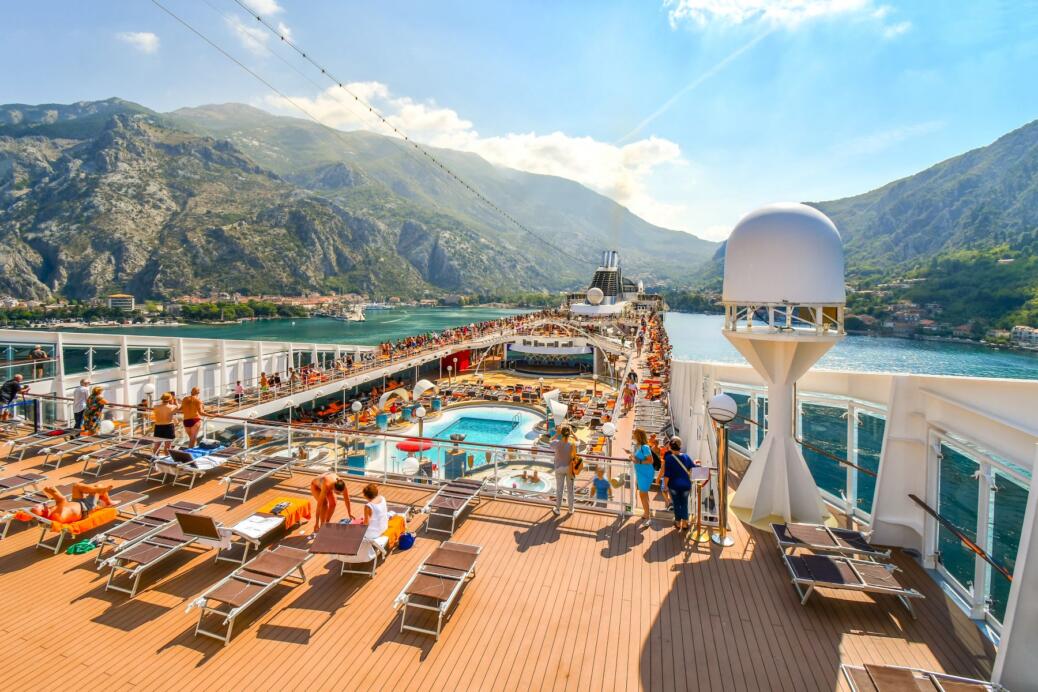
Cruise ships have long served as testing grounds for new guest experiences. Over the years, cruise lines have introduced everything from specialty restaurants and private lounges to surf simulators, cooking classes, luxury retail, wellness programs, immersive entertainment, and increasingly sophisticated shore experiences.
Coyle once examined this trend through a much simpler example: renting a guitar onboard a cruise ship for $10. The specific concept reflected its time, but the business question behind it remains highly relevant. Which onboard amenities genuinely improve the cruise guest experience, and which simply add another feature to an already crowded list?
The answer depends less on novelty than on relevance. A successful amenity should fit the cruise brand, appeal to its passengers, operate smoothly, and provide enough value to justify the guest’s time or additional spending. When those elements align, ancillary experiences can strengthen satisfaction while also creating meaningful revenue opportunities.
For cruise operators, the challenge is determining which concepts enhance the cruise guest experience and how well those experiences perform once they become part of everyday shipboard operations.
What Are Onboard Cruise Amenities?
Cruise ship amenities include the facilities, services, activities, and experiences available to passengers beyond basic transportation and accommodations. Some are included in the cruise fare, while others are offered as premium or optional purchases.
Depending on the cruise line and ship, amenities may include:
- Specialty restaurants
- Bars and lounges
- Spas and wellness facilities
- Fitness programs
- Pools and recreation
- Live entertainment
- Casinos
- Retail
- Cooking or enrichment programs
- Kids and family experiences
- Private lounges
- Premium deck areas
- Photography
- Technology packages
- Classes and workshops
- Excursions and destination experiences
- Personalized concierge services
The range can be extensive, particularly on large ships. Luxury and expedition operators may offer fewer individual venues but place greater emphasis on exclusivity, personalization, enrichment, destination access, or highly specialized service.
More Amenities Do Not Automatically Create a Better Cruise
Adding another restaurant, activity, retail concept, or entertainment option gives passengers more choice, but choice alone does not guarantee value.
The amenity needs to make sense for the customers the cruise line serves.
A family-oriented ship and an ultra-luxury vessel may both offer wellness, dining, and entertainment, but the execution and customer expectations surrounding those experiences can be dramatically different. The same concept can succeed on one brand and feel completely out of place on another.
Cruise operators evaluating an amenity should consider several questions:
Does It Fit the Brand?
An experience should reinforce the cruise line’s positioning. A luxury operator may prioritize exclusivity, craftsmanship, personalization, or access, while a contemporary cruise line might place greater emphasis on variety, energy, entertainment, or family participation.
Does the Target Guest Actually Want It?
Novelty can attract attention during launch, but long-term success depends on demand. Operators need to understand whether the amenity solves a real customer need or creates an experience passengers genuinely value.
Can It Be Delivered Consistently?
An excellent concept can underperform if reservations are confusing, employees are poorly trained, wait times are excessive, or the onboard execution varies considerably.
Is the Value Clear?
For paid experiences, guests should understand what they receive in exchange for the additional charge. Premium pricing increases expectations for both the product and service surrounding it.
The Guest Experience Extends Beyond the Amenity Itself
Cruise operators can make the mistake of evaluating an onboard amenity primarily by its physical product.
A specialty restaurant may have excellent food. A spa may feature premium treatments. A retail store may carry desirable merchandise. Yet the guest experiences far more than the core product.
Consider a specialty restaurant. The complete experience may include:
- Discovering the restaurant before or during the cruise
- Understanding the concept and price
- Making a reservation
- Arriving and being greeted
- Ordering food and beverages
- Receiving service throughout the meal
- Paying any applicable charges
- Resolving a problem if something goes wrong
- Deciding whether the experience was worth repeating
Each stage can influence the guest’s perception of value.
This is one reason mystery shopping can be useful when evaluating ancillary services. Rather than examining only the final product, operators can observe the entire customer journey surrounding it.
Which Cruise Amenities Create the Most Guest Value?
There is no universal ranking because the answer depends on passenger demographics, itinerary, ship design, cruise segment, and brand positioning. A more useful approach is to consider the type of value an amenity creates.
| Amenity Category | Potential Guest Value | Operational Questions |
| Specialty Dining | Variety, exclusivity, culinary discovery | Is the experience meaningfully different from included dining? |
| Spa & Wellness | Relaxation, health, personal care | Does service justify the premium price? |
| Entertainment | Enjoyment, shared experiences, differentiation | Is quality consistent across performances and venues? |
| Retail | Convenience, discovery, luxury purchases | Is the assortment relevant to the passenger profile? |
| Enrichment | Learning, culture, destination connection | Does programming feel substantive and well delivered? |
| Recreation | Activity, social connection, family appeal | Are access and wait times managed effectively? |
| Premium Spaces | Privacy, comfort, exclusivity | Does the experience deliver enough added value? |
| Shore Experiences | Destination access, education, adventure | Does execution meet the expectations created onboard? |
This framework shifts the discussion away from simply asking what amenities a ship offers and toward a more commercially useful question: What role does each amenity play in the passenger experience?
Onboard Revenue and Guest Experience Need to Work Together
Ancillary revenue is an important part of cruise economics. Passengers may spend beyond the base fare on dining, beverages, spa treatments, retail, entertainment, excursions, premium spaces, internet access, photography, and other products or services.
The opportunity is substantial, but the way these services are presented matters.
Passengers are more likely to view an additional purchase positively when the value is clear and the experience feels appropriate to the brand. Repeated upselling, confusing packages, unexpected charges, or aggressive sales interactions can have the opposite effect.
Effective Ancillary Experiences Often Share Three Characteristics
Relevance: The offer makes sense for the guest and the context.
Transparency: Pricing, inclusions, limitations, and benefits are communicated clearly.
Execution: The purchased experience delivers what the passenger reasonably expected.
A cruise line can therefore increase revenue while still protecting guest satisfaction, but those objectives should be evaluated together rather than independently.
Specialty Dining Is a Good Test of Perceived Value
Few onboard experiences demonstrate the relationship between revenue and guest expectations as clearly as specialty dining.
When passengers pay an additional charge for a restaurant, expectations often rise. Guests may anticipate better ingredients, distinctive cuisine, a more intimate environment, stronger beverage knowledge, personalized service, or an experience they cannot receive in the ship’s included dining venues.
The evaluation should therefore extend beyond whether the meal was technically acceptable.
A Specialty Dining Evaluation Can Examine:
- Reservation ease
- Accuracy of pricing information
- Greeting and seating
- Menu knowledge
- Food quality
- Beverage recommendations
- Pacing
- Table maintenance
- Personalization
- Management presence
- Service recovery
- Overall value
Coyle’s experience with restaurant mystery shopping and consulting can be applied to cruise food and beverage operations where the hospitality experience is just as important as the product.
Luxury Cruise Amenities Require a Different Value Proposition
Luxury travelers may evaluate amenities differently from passengers aboard contemporary or mass-market ships.
An ultra-luxury guest may place less value on the sheer number of options and more value on exclusivity, convenience, personalization, quality, and access. A smaller selection of exceptionally executed experiences may support the brand more effectively than a long list of paid upgrades.
For luxury and upscale cruise brands, important considerations can include:
- Ease of access
- Personal recognition
- Limited or private experiences
- Expert-led programming
- Premium food and beverage
- High-touch wellness
- Destination immersion
- Concierge assistance
- Discreet service
- Seamless inclusion
Pricing also affects perception. Luxury guests may be willing to spend considerably more for an exceptional experience, but repeated transactional interactions can conflict with an all-inclusive or highly personalized brand promise.
The commercial model and the hospitality model need to support one another.
Personalization Can Improve Ancillary Revenue Without Aggressive Selling
The strongest sales interaction may not feel much like selling.
Employees who understand the passenger can recommend experiences that genuinely align with that person’s interests. A guest interested in wine may appreciate learning about a tasting. A traveler focused on wellness may value a relevant spa program. A family may appreciate an activity suited to the ages and interests of their children.
This approach depends on listening and product knowledge.
Generic promotion treats every passenger as the same customer. Personalized recommendations use context to make the offer more useful.
For cruise lines, this creates an opportunity to evaluate sales interactions not simply by conversion rates but by their effect on the overall customer experience.
Employee Knowledge Can Determine Whether an Amenity Succeeds
Cruise lines can invest heavily in designing new onboard concepts, but frontline employees often determine whether passengers understand and use them.
Guests may ask:
- What does the experience include?
- Is there an additional charge?
- Do I need a reservation?
- Is it suitable for children?
- What should I wear?
- How long does it take?
- Is it available on a port day?
- How is it different from an included option?
- Can dietary or accessibility needs be accommodated?
Employees should be able to answer these questions accurately and confidently.
Poor product knowledge can suppress demand, create incorrect expectations, and generate service problems later. For new amenities in particular, evaluating employee communication can help operators identify training gaps early.
Friction Can Undermine an Otherwise Strong Experience
An amenity may be excellent once the guest accesses it but still receive weak feedback because the surrounding process creates unnecessary difficulty.
Common friction points can include:
Discovery
Passengers cannot easily determine what is available or how the experience differs from other options.
Booking
Reservations are difficult to secure, technology is confusing, or availability is not communicated accurately.
Pricing
Guests do not clearly understand what is included or why an additional charge applies.
Arrival
Queues, directions, check-in procedures, or reservation errors create frustration before the experience begins.
Delivery
The actual service fails to match expectations established during promotion or booking.
Recovery
When something goes wrong, employees do not have a clear process for resolving the issue.
Evaluating these stages separately can help leadership determine whether a problem lies with the amenity itself or the customer journey surrounding it.
When Should Cruise Lines Add a New Amenity?
New concepts can help cruise brands remain competitive, respond to changing passenger interests, and generate additional revenue. They also introduce operational complexity.
Before expanding an amenity across a fleet, operators may benefit from evaluating several dimensions.
Guest Demand: Is there evidence that the target passenger wants the experience?
Brand Alignment: Does the concept strengthen the cruise line’s positioning?
Operational Feasibility: Can employees deliver the experience consistently?
Space and Capacity: Can enough guests access the amenity without excessive congestion or disappointment?
Revenue Potential: Is the commercial model sustainable?
Guest Satisfaction: Does the amenity improve the voyage or create additional friction?
Scalability: Can the concept work across different ships, itineraries, and passenger profiles?
Pilot programs and structured customer experience measurement can help answer these questions before a concept becomes a permanent fleet-wide offering.
How Mystery Shopping Can Evaluate Onboard Amenities
Passenger surveys can reveal whether guests enjoyed an amenity, but a cruise mystery shopping program can document how the experience actually unfolded.
An evaluation might examine:
- How the amenity is marketed
- Employee product knowledge
- Reservation process
- Pricing transparency
- Availability
- Sales approach
- Arrival and check-in
- Employee interactions
- Physical presentation
- Service delivery
- Personalization
- Upselling
- Problem resolution
- Overall perceived value
The same methodology can be applied across different ships or concepts, allowing leadership to compare execution and identify recurring strengths or weaknesses.
For an ancillary revenue program, the findings can also help explain why two seemingly similar venues or services perform differently from the customer’s perspective.
Measure More Than Revenue
Revenue provides a clear measure of commercial performance, but it does not necessarily reveal the long-term effect an amenity has on the cruise brand.
A heavily promoted experience may generate strong short-term sales while creating negative guest sentiment. Another amenity may produce modest direct revenue but contribute meaningfully to satisfaction, differentiation, loyalty, or premium positioning.
A broader evaluation can consider:
- Revenue
- Participation
- Repeat usage
- Guest satisfaction
- Complaints
- Perceived value
- Employee execution
- Operational consistency
- Brand alignment
- Influence on the overall voyage
Looking at these measures together can provide a better understanding of an amenity’s actual contribution.
From a $10 Guitar Rental to the Modern Cruise Experience
The cruise industry has changed dramatically since Coyle first considered whether passengers might pay to rent a guitar onboard. Ships have become more sophisticated, technology has changed how passengers plan their days, and cruise brands continue to experiment with new dining, entertainment, wellness, retail, and destination experiences.
The underlying lesson has changed very little.
Novelty can attract attention, but successful amenities create meaningful value for the passenger. They fit the brand, operate smoothly, are communicated clearly, and deliver an experience worthy of the time and money guests invest in them.
Cruise lines that evaluate amenities from the passenger’s perspective can make better decisions about which concepts to introduce, which to improve, and which may no longer contribute enough to the voyage.
Understand Which Onboard Experiences Create Real Guest Value
Coyle Hospitality helps cruise operators evaluate the passenger journey across onboard services, amenities, revenue centers, and customer interactions. Customized mystery shopping programs can examine how guests discover, purchase, access, and experience the products and services available throughout a voyage.
From restaurants, bars, spas, and retail to entertainment, excursions, premium experiences, and service recovery, Coyle provides detailed customer experience observations that can help operators improve execution while protecting the overall cruise brand.
Contact Coyle Hospitality to discuss a customized cruise mystery shopping or onboard customer experience program.
Frequently Asked Questions
What amenities are commonly available on cruise ships?
Cruise ship amenities can include specialty restaurants, bars, lounges, spas, fitness facilities, pools, recreation, entertainment, casinos, retail, enrichment programs, kids’ activities, premium deck areas, concierge services, and shore excursions. Available amenities vary significantly by ship and cruise segment.
What are ancillary services on a cruise?
Ancillary services are optional products or experiences offered in addition to the core cruise fare. Depending on the cruise line, these may include specialty dining, beverages, spa treatments, excursions, retail, internet access, photography, premium activities, and other paid experiences.
How do cruise lines make money from onboard amenities?
Cruise lines can generate onboard revenue through purchases such as specialty dining, beverages, spa and wellness services, retail, excursions, entertainment, premium spaces, technology packages, and other optional products. Revenue models vary significantly between mainstream, premium, luxury, and all-inclusive cruise brands.
How can cruise lines improve onboard guest experiences?
Cruise lines can improve onboard experiences by understanding passenger demand, reducing booking and access friction, training employees thoroughly, communicating pricing clearly, personalizing recommendations, monitoring service quality, and evaluating whether amenities consistently deliver the value promised to guests.
How can mystery shopping evaluate cruise ship amenities?
Mystery shopping can evaluate the complete experience surrounding an onboard amenity, including promotion, reservations, pricing transparency, employee knowledge, sales interactions, arrival, service delivery, personalization, problem resolution, and perceived value. These observations can help cruise operators identify operational issues that may not be apparent from revenue or satisfaction scores alone.


